
This coin pusher machine buying guide explains the main features buyers should compare before purchasing commercial coin-operated equipment for an arcade, family entertainment center, shopping mall or indoor amusement venue.
Coin pusher machines attract attention through moving platforms, falling coins, lights, sounds and visible rewards. Their simple playing method can be understood by different customer groups, but the cabinet structure, playing system, payment method and prize configuration may vary considerably between models.
A practical coin pusher machine buying guide should evaluate more than cabinet appearance. Buyers should also compare player capacity, coin mechanisms, playfield construction, operating settings, maintenance access, electrical requirements, customization and international shipping.
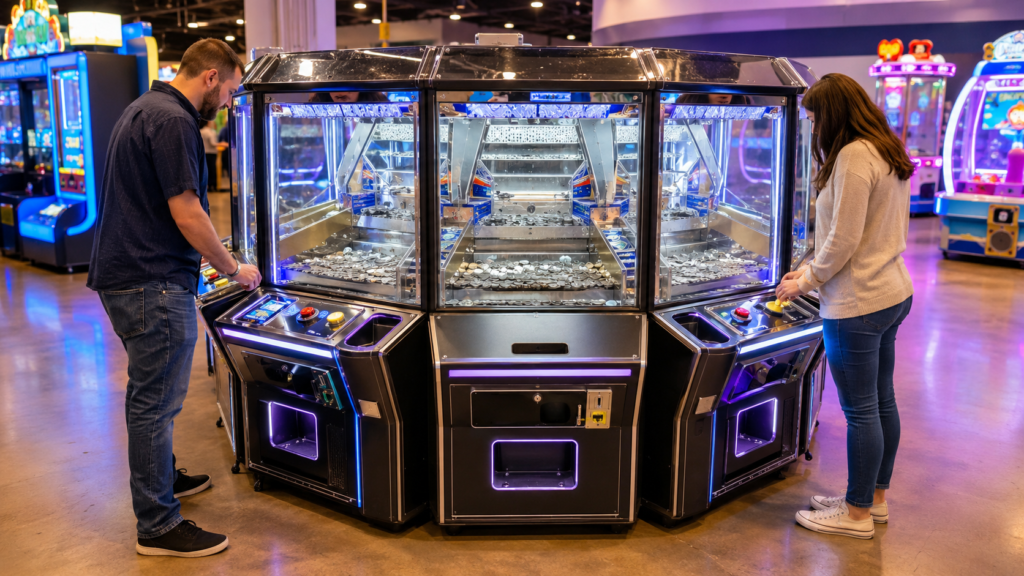
Coin Pusher Machine Buying Guide: Define Your Requirements
Before comparing machines, identify how the equipment will be used in your venue.
Some coin pushers are designed for one player, while larger cabinets may support several players at the same time. Different models may use tokens, coins, points, tickets or other reward methods depending on the selected configuration and local operating requirements.
Prepare the following information before requesting a quotation:
- Type and size of the venue
- Available installation area
- Main customer age groups
- Expected number of players
- Preferred payment method
- Required reward or ticket system
- Destination country
- Local voltage and plug type
- Preferred cabinet style
- Required language and branding
Operators must also confirm that the selected game format complies with the applicable laws and amusement regulations in the destination market. Requirements concerning coins, prizes, tickets and redemption systems can differ between countries and regions.
Tip 1: Choose the Right Cabinet and Player Capacity
Player capacity affects the machine’s footprint, price, power requirements and position within the venue.
A compact single-player unit may be suitable for a small arcade, retail entrance or limited entertainment area. It can also be used to test customer interest before a venue adds larger equipment.
A multi-player coin pusher can create a stronger visual presence and allow several customers to participate at once. This may suit larger family entertainment centers, game rooms and amusement areas with higher visitor traffic.
However, buyers should not compare machines only by the number of player positions. Request the complete cabinet dimensions and determine how much surrounding space is required for comfortable operation.
The planned installation area should include space for:
- Players standing around the machine
- Staff access during maintenance
- Opening service doors
- Refilling tickets or prizes
- Cleaning the exterior and playfield
- Safe movement through nearby walkways
Confirm whether the cabinet is shipped fully assembled or divided into sections. Large cabinets may require wide doors, freight elevators or additional installation planning.
Tip 2: Compare the Playfield Design and Customer Visibility
The playfield is the main area customers watch while playing. Its layout should make the movement of coins or tokens easy to see.
This coin pusher machine buying guide recommends reviewing recent photographs and operating videos of the actual model. Promotional pictures alone may not clearly show platform movement, internal lighting or the customer’s viewing angle.
Check the size and depth of the playfield, the position of the moving platform and the visibility of rewards. Transparent panels should provide a clear view while protecting the internal components from customer contact.
A well-organized playfield can help customers understand what is happening. Excessive decorations may look attractive in photographs but can make the coins, tokens or prizes difficult to see.
Ask the manufacturer to demonstrate:
- How coins or tokens enter the playfield
- How the moving platform operates
- Where successful items are collected
- How staff access the internal area
- How rewards or tickets are refilled
- How the playfield is cleaned
- How operating settings are adjusted
If the machine includes rotating parts, bonus features or electronic displays, request a complete video showing these functions during normal play.
Tip 3: Confirm the Coin, Token and Reward System
The playing and reward system should match the venue’s operating model.
Some venues use local coins, while others use dedicated arcade tokens, rechargeable cards or cashless payments. Never assume that the standard coin acceptor will recognize the currency or token used at your location.
This coin pusher machine buying guide recommends sending a sample coin or complete size, weight and material information to the supplier when a physical coin acceptor is required. The manufacturer can then confirm whether the selected mechanism is suitable.
Buyers should also ask how the machine handles successful plays. Depending on the configuration, it may dispense tickets, record electronic points or provide another approved reward method.
Confirm the following details:
- Accepted coin or token specifications
- Number of credits provided per payment
- Adjustable game settings
- Ticket or point output options
- Reward collection position
- Refill procedure
- Error and jam detection
- Staff access controls
- Compatibility with an existing arcade card system
Any payout, ticket or prize settings should be configured according to local regulations. The operator is responsible for confirming which game formats are permitted in the destination market.
Tip 4: Inspect the Mechanical System and Internal Construction
A coin pusher contains moving components that require stable operation and regular inspection.
Following this coin pusher machine buying guide can help buyers compare mechanical construction and maintenance access before ordering.
Ask the supplier to explain the platform drive system and show the internal mechanical layout. The platform should move consistently without unusual vibration or contact with surrounding components.
Buyers should check whether technicians can reach the drive system, sensors, coin channels and electrical parts through secure service doors. Easy maintenance access can reduce the time required for cleaning, inspection and component replacement.
Request information about:
- Platform drive components
- Motor specifications
- Sensors and switches
- Coin or token channels
- Internal wiring arrangement
- Ventilation
- Service door positions
- Cabinet locks
- Recommended lubrication or cleaning
- Frequently replaced parts
The cabinet structure should remain stable during operation. Ask for a video showing the machine from the front, side and internal service area rather than relying on a short video of the lights and display.
The supplier should also explain what happens after a coin jam, sensor error or temporary power interruption. Clear restart and troubleshooting procedures are valuable for daily operation.
Tip 5: Review Lighting, Sound and Display Functions
Coin pusher machines often use LED lighting, sound effects and digital displays to attract customers. These features should support the game rather than make the operating process difficult to understand.
Check whether the lighting makes the playfield and rewards easy to see under normal venue conditions. A machine that looks bright inside a dark showroom may appear different under strong shopping mall lighting.
Ask whether sound volume can be adjusted. Volume control is important when several arcade machines operate in the same area or when the machine is installed near restaurants, cinemas or retail stores.
If the cabinet includes a screen, confirm its purpose and available content. Depending on the model, a display may show instructions, scores, bonus information or promotional material.
Buyers should request a complete demonstration of the lighting modes, sound settings and screen interface. Confirm whether the language can be changed and whether the operator can update approved content.
Avoid using copyrighted characters, music, graphics or videos without permission. Custom exterior and screen designs should use artwork owned or authorized by the buyer.
Tip 6: Compare Payment and Management Options
Payment compatibility should be confirmed before production begins.
Possible options may include coin acceptors, token acceptors, card readers or QR-based cashless systems. Availability depends on the machine and payment hardware, and third-party systems may require technical integration.
This coin pusher machine buying guide recommends providing the supplier with information about any existing arcade management system. Include the reader model, interface requirements and relevant technical documents.
Ask how staff can adjust:
- Price per play
- Credits provided per payment
- Ticket or point settings
- Sound volume
- Lighting modes
- Game difficulty
- Promotional or free-play mode
- Daily operating records
If revenue or session records are important, confirm exactly what data the system can display. Request screenshots or a video of the management interface instead of relying on a general statement that the machine supports “data management.”
The operator should also know how to open the payment box, clear a coin jam, test the machine and reset a temporary error.
Tip 7: Check Safety, Maintenance and Spare Parts
Commercial amusement equipment requires routine cleaning and inspection, especially in busy public locations.
The cabinet should have stable panels, secure service doors and protected electrical components. Customer-accessible edges should be properly finished, and cables should be arranged so they do not interfere with normal use.
Confirm the required voltage, frequency, power connection and plug type for the destination country. If local certification or electrical documentation is required, discuss this with the supplier before placing the order.
Prepare a maintenance schedule that includes:
- Cleaning transparent panels
- Removing dust from ventilation areas
- Inspecting coin and token channels
- Checking platform movement
- Testing buttons and payment devices
- Inspecting electrical connections
- Checking ticket dispensers
- Reviewing unusual sounds or vibration
Ask which spare parts the supplier recommends ordering with the machine. Small components such as switches, sensors, belts or payment-related parts may be easier and less expensive to ship together with the original order.
Request operating manuals, troubleshooting instructions and maintenance videos. These materials allow local technicians to identify components and communicate more efficiently with the supplier.
Tip 8: Confirm Customization, Packaging and Shipping
Customization can help a coin pusher match a venue’s visual style and operating requirements.
Depending on the selected model, buyers may discuss cabinet colors, exterior graphics, lighting, language, voltage, plug type, payment devices and reward systems. Confirm available options with the supplier because functions may differ between machines.
This coin pusher machine buying guide recommends recording every approved customization item in the quotation or order confirmation. Buyers should review cabinet drawings and graphic designs before production.
Use only original or authorized logos, characters and artwork. If no brand authorization is available, select a generic commercial design.
International buyers should request the following shipping information:
- Machine dimensions
- Packed dimensions
- Net and gross weight
- Number of packages
- Packing materials
- Assembly requirements
- Loading photographs
- Installation instructions
- Recommended shipping method
Ask whether the machine will be packed in a wooden case and how moving parts are protected. Confirm whether the cabinet must be assembled after delivery and which tools are required.
Before shipping, request a testing video showing the completed machine, payment process, playfield movement, lighting, sound and reward function.
Questions to Ask a Coin Pusher Supplier
Use the same questions when comparing quotations from different manufacturers:
Use this coin pusher machine buying guide when reviewing quotations from different suppliers.
- What player capacity does the machine support?
- What are the complete cabinet dimensions?
- Which coin or token specifications are accepted?
- Can the machine connect to a card reader?
- Which ticket or point systems are available?
- Which operating settings can staff adjust?
- What voltage and plug will be supplied?
- Can the interface language be customized?
- Are cabinet colors and graphics customizable?
- Which parts require routine maintenance?
- Which spare parts should be ordered?
- Are manuals and operating videos provided?
- How is the machine packed?
- Is assembly required after delivery?
- Can a complete testing video be provided before shipment?
- What information is required to calculate shipping?
A professional quotation should list the actual configuration rather than provide only a cabinet picture and total price.
Plan the Machine Mix and Floor Position
Coin pushers can be combined with commercial arcade machines such as claw machines, racing simulators, shooting games and ticket redemption equipment.
The best machine combination depends on the venue size, target customers and available budget. Operators should avoid filling an entire location with machines that provide the same experience.
Place the coin pusher where customers can see the playfield without blocking entrances or important walkways. Staff should also be able to reach the service doors and refill area.
Industry resources from IAAPA can help operators learn more about amusement venue planning, visitor experience and equipment operation.
Monitor customer activity after installation. Operating records and staff observations can help determine whether pricing, machine position or game settings need adjustment. No machine can guarantee revenue, so purchasing decisions should be based on the complete venue plan and realistic operating costs.
Choose Commercial Coin Pusher Machines From LeChuang
LeChuang supplies commercial amusement equipment for arcades, family entertainment centers, shopping malls and indoor game venues.
Buyers can discuss cabinet design, player capacity, payment methods, ticket systems, voltage, language, customization, spare parts and international packaging according to the selected machine.
Product photographs, operating videos and technical details can be provided for confirmation. To receive a suitable recommendation, send LeChuang your destination country, venue type, available space, required quantity and preferred payment system.
Use this coin pusher machine buying guide as a checklist when comparing equipment and quotations. Contact LeChuang to request available models, configuration details and shipping information for your project.